
After an accident, the shop you pick decides more than how your car looks. It decides whether the structure, airbags and driver-assist sensors work the way the manufacturer designed them, and whether the repair holds up for years.
Most drivers only need a body shop once every few years, so they don’t know what to look for. Insurers recommend their own shops, friends give mixed advice, and search results all claim to be “the best.”
This guide explains how to choose a collision repair shop in Henderson or Las Vegas. It covers the 10 things to check, the questions to ask, the red flags to avoid, and what Nevada law says about your right to choose.
Quick Checklist: What to Look for in a Collision Repair Shop
Check | What good looks like |
|---|---|
License | A Nevada-licensed body shop, with the license number on its estimates and invoices |
Training | I-CAR training and ASE-certified technicians; OEM certification for your brand if you can get it |
Repair procedures | Follows the manufacturer’s published repair procedures for your make and model |
Estimate | A written, itemized estimate listing parts, labor hours and paint |
Parts | Tells you whether parts are OEM, aftermarket or recycled, and why |
Warranty | A written warranty that spells out what’s covered and for how long |
Insurance | Works with your insurer, whatever company it is, and handles the claim for you |
Reviews | Consistent, recent reviews that mention communication and repair quality |
Facility | Clean shop, paint booth, frame-measuring equipment |
Communication | Explains the damage, gives realistic timelines and calls before extra work |
1. Make Sure the Shop Is Licensed in Nevada
Start with the basics. Nevada’s insurance law refers specifically to body shops licensed under NRS 487.630. Insurers aren’t allowed to knowingly send you to an unlicensed shop (NRS 690B.016).
The same law lets your insurer rely on the license number a shop prints on its estimates and invoices. So look for it on your paperwork. If a shop can’t give you one, keep looking.
2. Check Training and Certifications
Modern cars use high-strength steel, aluminum, bonded panels and dozens of sensors. Repairing them properly takes current training.
Look for:
- I-CAR training: I-CAR is the main training organization for the collision industry. Gold Class status means the shop’s technicians keep up with ongoing role-based training.
- ASE certification: ASE-certified technicians have passed national competency tests.
- Manufacturer (OEM) certification: Some brands certify shops to repair their vehicles. This matters most for luxury models, EVs and newer cars.
Ask to see the certificates, not just a logo on the website.
3. Ask Whether They Follow OEM Repair Procedures
Every manufacturer publishes step-by-step repair procedures. They specify where a panel can be sectioned, which welds or rivets to use, and which sensors need recalibrating afterward.
A quality shop looks up these procedures for your exact make, model and year before it starts work. Ask directly: “Do you research and follow the OEM repair procedures for my car?” A vague answer is a warning sign.
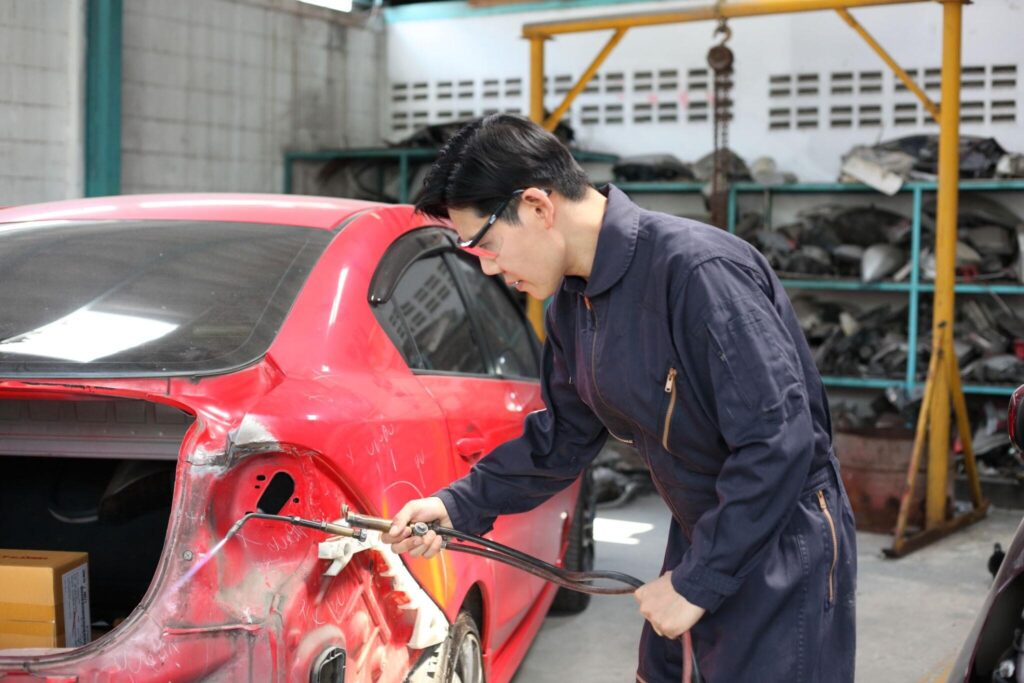
If your vehicle has a frame or unibody damage, ask how they measure it. Good shops use computerized measuring to confirm the structure is back to factory specs. Read more in our guide to car frame repair.
4. Confirm ADAS Calibration
Lane-keep assist, automatic braking, blind-spot monitors and adaptive cruise rely on cameras and radar in the bumpers, mirrors and windshield. Even a minor bumper repair can knock them out of alignment.
Ask the shop whether it calibrates these systems after repairs, either in-house or through a dealer or specialist. Ask for a printout showing the calibration passed.
5. Get a Written, Itemized Estimate
Never let work start on a verbal quote. A proper estimate lists each part, the labor hours per operation, paint and materials, and any sublet work such as alignment or calibration.
Getting two or three estimates is reasonable. Compare the scope, not just the total. A much lower quote usually means fewer operations, cheaper parts or skipped steps. Our guide on how collision repair estimates work explains each line, and you can request an auto body estimate from VIP Collision.
Once the car is taken apart, it’s normal to find hidden damage. The shop should then file a supplement with your insurer. Ask how they’ll tell you before doing extra work.
6. Know What Parts They’ll Use
There are three main types of parts:
Part type | What it is | Good to know |
|---|---|---|
OEM | Made by your car’s manufacturer | Best fit and finish; usually recommended for newer vehicles and safety components |
Aftermarket | Made by a third party | Usually cheaper; quality varies by brand |
Recycled / used | Genuine OEM parts from another vehicle | Can save money on older vehicles |
Insurance estimates sometimes specify aftermarket or recycled parts to keep costs down. If you want OEM parts, raise it with both the shop and your insurer before repairs begin. Depending on your policy, you may need to pay the difference.
7. Get the Warranty in Writing
A shop that trusts its work will put a warranty in writing. Before you sign, check:
- How long the workmanship and the paint are covered
- What’s excluded (normal wear, new damage, parts covered by the manufacturer’s warranty)
- Whether the warranty transfers if you sell the car
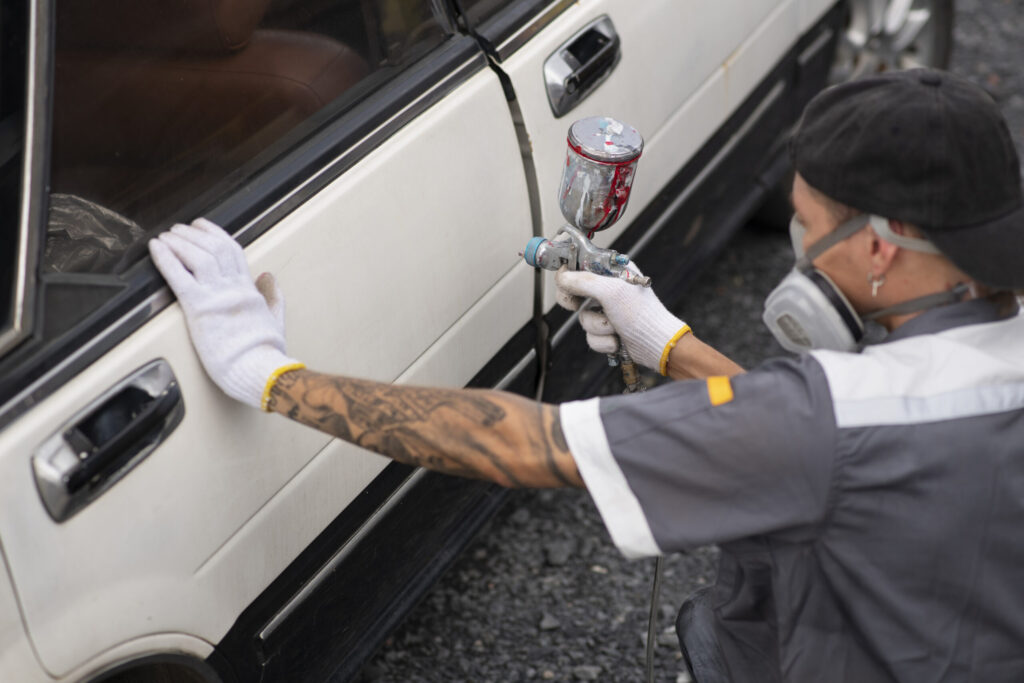
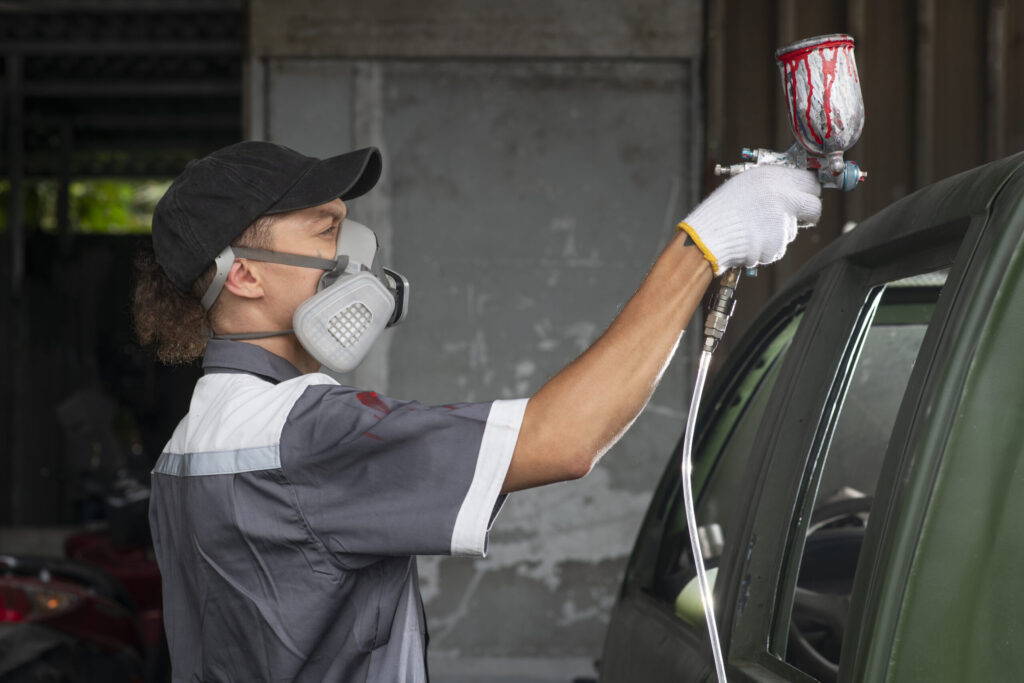
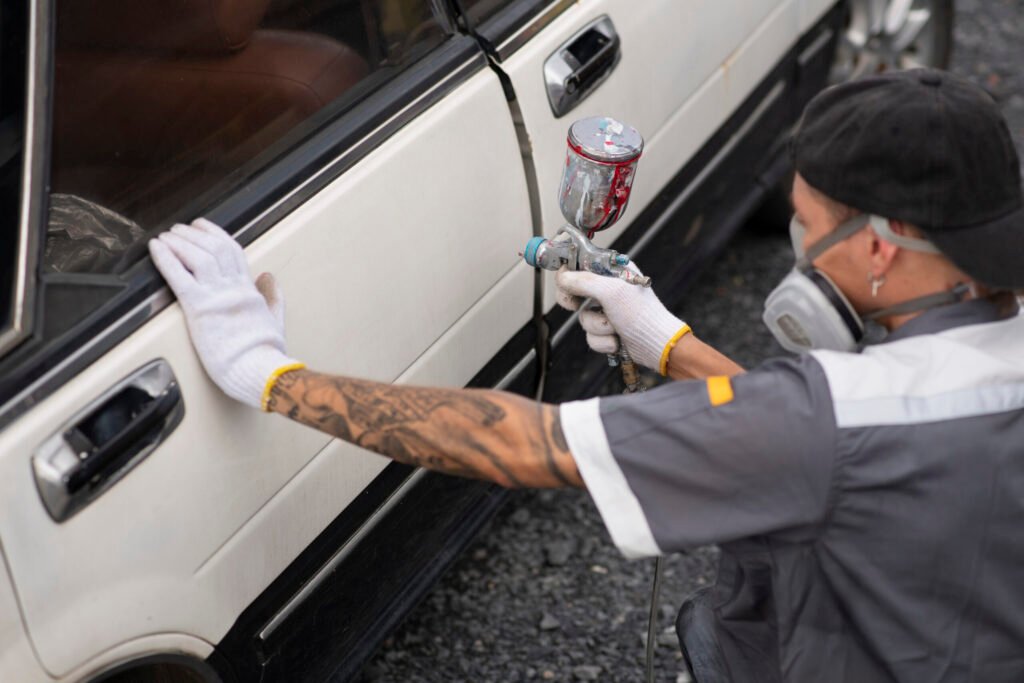
8. Look at Paint Matching and Finish Quality
In Southern Nevada, paint does a lot of work. Intense sun and summer heat break down poorly applied clear coat quickly, and a bad color match shows up in bright daylight.
Ask about the paint booth, the paint system and how they blend into the panels next to the repair. Look at photos of finished cars in direct sunlight. Learn more about auto body paint and why car paint peels in the Las Vegas sun.
9. Read Reviews, and Read Them Properly
Don’t just look at the star rating. Check:
- How recent they are: Focus on the last 12 months.
- What they mention: Repair quality, communication, meeting deadlines and dealing with insurance.
- How the shop responds: A calm, helpful reply to a negative review says a lot.
Word of mouth still counts. Ask friends, coworkers or a local mechanic where they’ve had good collision work done. You can read VIP Collision’s customer reviews and see before-and-after photos of our work.
10. Visit the Shop and Judge the Communication
If you can, visit in person. A clean, organized shop with modern equipment and well-protected customer cars is a good sign. A cluttered, chaotic one is a warning.
Notice how they treat you during the estimate. Do they explain the damage clearly? Do they give a realistic timeline? Do they answer questions without rushing you? That’s how they’ll communicate during the repair. See how long auto body repair takes so you know what’s realistic.
Your Right to Choose a Repair Shop in Nevada
Many drivers think they have to use the shop their insurance company recommends. In Nevada, you don’t.
Under NRS 690B.016:
- You can have your vehicle repaired at the licensed body shop of your choice, whether you’re the policyholder or a claimant.
- Your insurer must tell you about this right when you first contact it about the damage.
- Your insurer can’t require you to use one licensed shop over another.
The insurer still only has to pay what your policy calls a reasonable rate. So agree the scope and price with the shop and the adjuster early. For more detail, read do you have to use the insurance company’s repair shop? or see how we handle insurance claims.
Questions to Ask a Collision Repair Shop
- What is your Nevada body shop license number?
- Are your technicians I-CAR trained or ASE certified? Any OEM certifications?
- Will you follow the manufacturer’s repair procedures for my vehicle?
- Will you use OEM, aftermarket or recycled parts, and why?
- Do you calibrate ADAS sensors and cameras after the repair?
- Can I have a written, itemized estimate?
- How will you handle hidden damage and supplements with my insurer?
- What does your written warranty cover, and for how long?
- How long will the repair take, and how will you keep me updated?
- Can you help arrange a rental car through my insurance?
Red Flags to Watch Out For
- No written estimate, or pressure to sign right away
- An estimate far below everyone else’s with no explanation
- No license number on the paperwork
- Can’t or won’t explain the repair process
- Asks for full payment up front for an insurance job
- No written warranty
- Lots of recent reviews about missed deadlines or bad paint matching
What Happens After You Choose a Shop
- Report the claim to your insurer and tell them which shop you’ve chosen. If you’ve just had an accident, start with what to do after a car accident in Henderson.
- Estimate and inspection: The shop writes the estimate and the insurer’s adjuster reviews it.
- Teardown and supplement: Hidden damage is documented and sent to the insurer for approval.
- Repair: Structural work, body work, paint and refinishing, then reassembly.
- Calibration and quality check: ADAS calibration, alignment, road test and a final inspection.
- Pickup: Look over the car in daylight, check the paperwork and keep your warranty.
Wondering about cost? See how much auto body repair costs in Henderson, NV.
Frequently Asked Questions
Can I choose my own body shop in Nevada?
Yes. NRS 690B.016 lets insureds and claimants use the licensed body shop of their choice. Your insurer must tell you about this right when you first report the claim.
Do I have to use my insurance company’s preferred shop?
No. Insurers can recommend shops in their direct repair program (DRP), but Nevada law says they can’t require you to use one licensed shop over another.
How many estimates should I get?
Two or three is usually enough. Compare what each one includes (parts, labor hours, calibration), not only the total.
What certifications should a collision repair shop have?
Look for I-CAR training (Gold Class is the top level), ASE-certified technicians and, for newer or luxury vehicles, manufacturer certification for your brand.
Are aftermarket parts bad?
Not always. Quality varies by manufacturer. OEM parts give the most reliable fit, especially for newer vehicles and safety-related parts. Ask which type the estimate uses.
Is the cheapest estimate the best choice?
Rarely. A much lower estimate often leaves out operations, uses lower-grade parts or skips calibration. Compare the scope line by line.
How long does collision repair take?
It depends on the damage, parts availability and how quickly the insurer approves the work. Minor repairs can take a few days; major structural repairs can take several weeks.
Choose a Henderson Collision Repair Shop You Can Trust
The right shop is licensed, trained and open about parts, pricing and timelines. It also respects your right to choose. Use the checklist above and ask the hard questions before you hand over your keys.
If you’re in Henderson, Las Vegas or Boulder City, VIP Collision is happy to answer every question on this list. We work with all major insurance companies and give upfront estimates for collision repair of every size.
Schedule your estimate or call 725-999-4661. Visit us at 323 Sunpac Ct, Henderson, NV 89011, Monday to Friday, 8 A.M. to 5 P.M. Saturdays are by appointment.