You wash your car on a Saturday morning and notice it: a cloudy white patch on the hood, or flakes lifting off the edge of the roof. A few months later the patch is bigger. If you drive in Las Vegas or Henderson, you’re not imagining it, and you’re not alone. The desert is one of the hardest places in the country on automotive paint.
This guide covers why car paint peels in the Las Vegas sun, how to tell how bad the damage is, what you can (and can’t) fix yourself, and what a proper repair looks like.
Quick answer
Car paint peels in Las Vegas because strong UV light and months of triple-digit heat break down the clear coat, the transparent top layer that protects your color. Once the clear coat turns brittle and loses its grip, it lifts and flakes off, leaving the color coat exposed. Early haze can sometimes be polished out. Real peeling can’t be. The affected panels need to be sanded down, re-coated with color and clear, and blended by a body shop.
How your car’s paint is built
Modern factory paint is a layer system, and peeling is really a failure between those layers:
- E-coat and primer: bonds to the metal or plastic and blocks corrosion.
- Base coat: the actual color of your car.
- Clear coat: a tough, transparent layer that gives the gloss and takes the beating from sun, dust and weather.
The clear coat is a sacrificial shield. When it wears out, the damage moves down to the color and then to the primer and metal.
Why the Las Vegas sun is so hard on paint
- Intense UV, almost all year. UV light breaks the chemical bonds in clear coat resin. The clear dries out, turns chalky and brittle, and then starts to crack and lift. In summer, the UV index in Las Vegas regularly reaches the extreme range. Local news has reported readings as high as 12.
- Long stretches of triple-digit heat. Between 1991 and 2020, Las Vegas averaged about 78 days a year at 100°F or hotter. In 2024 the city set a record with more than 110 of those days, and summer 2026 was the second-warmest on record. Paint sitting in direct sun gets far hotter than the air around it, and that heat speeds up the breakdown.
- Big daily temperature swings. Panels bake in the afternoon and cool at night. Paint layers expand and contract at slightly different rates, and over years of this the bond between clear coat and base coat weakens.
- Horizontal panels take the hit. The hood, roof, trunk lid and tops of the fenders face the sun all day. That’s why peeling almost always starts there, and why a car parked outside at work or in an uncovered apartment lot ages faster than one kept in a garage.
- Desert dust, grit and chips. Windblown dust, monsoon-season dust storms and freeway grit on I-15, I-215 and US-95 sandblast the finish and leave tiny chips. Every chip is an opening where the clear coat can start to lift.
- Water spots and contaminants. Water spots from sprinklers and hard tap water, bird droppings and bug residue all etch into the clear coat when they bake in the heat. Weakened clear fails sooner.
- Darker colors. Black, dark blue, dark gray and red absorb more heat and usually show sun damage first.
- A poor previous repair. Peeling isn’t always the sun’s fault. If a panel was repainted with poor prep, incompatible products or too little clear coat, it can peel years before the original paint around it. If only one repainted panel is peeling, that’s often the reason.
Which stage is your paint at? A quick self-check
| Stage | What you see | Can it be saved? |
| 1. Dull or hazy | Gloss is fading, the surface looks chalky, but nothing is lifting | Often yes. Professional polishing/paint correction plus protection (sealant or ceramic coating) can bring it back |
| 2. White, cloudy patches | Milky spots on the hood or roof, clear coat looks “frosted” | Sometimes partly. The clear is failing, and refinishing the panel is usually the lasting fix |
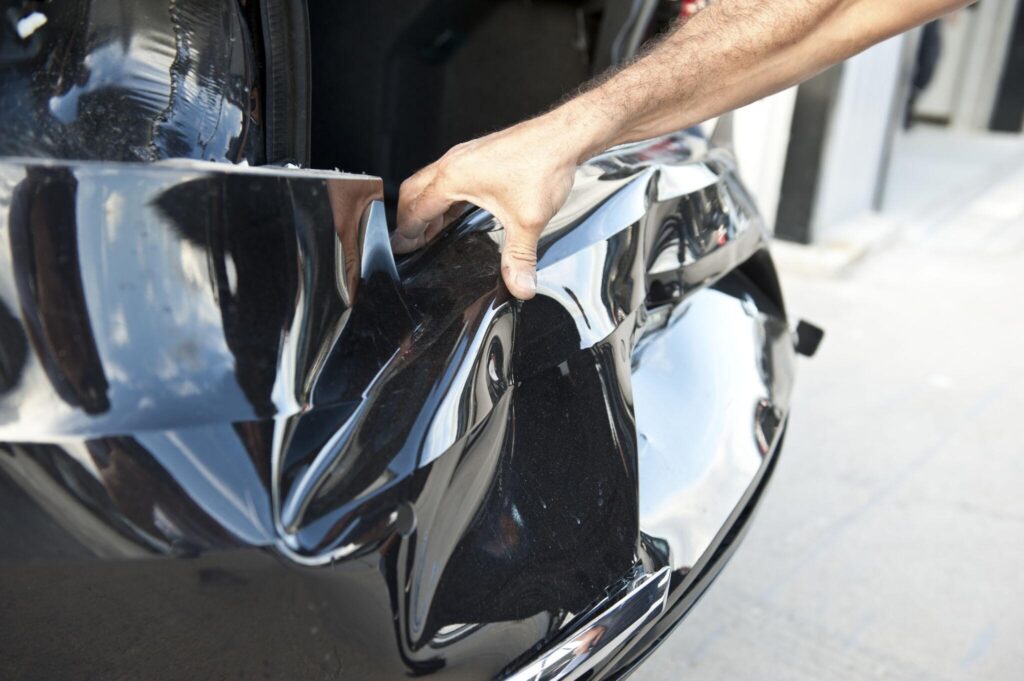
| 3. Flaking or peeling | Edges of clear coat lift, flakes come off when washed | No polish will fix it. The panel needs sanding, new base and clear, and blending |
| 4. Exposed color or primer | Color looks faded and rough, gray primer or bare metal shows | Refinish as soon as possible, before rust or further damage spreads |
A simple test: run your fingertip over the edge of the damaged area. If you can feel a ridge where the clear coat stops, it has already delaminated.
Can you fix peeling car paint yourself?
This is where a lot of online advice goes wrong.
What DIY can do: For Stage 1 haze, a good polish and a fresh coat of wax or sealant can improve the look and slow the damage down. A touch-up pen can seal a small stone chip before it spreads.
What DIY can’t do: Once clear coat is actually peeling, you can’t just spray new clear over the top. New clear won’t bond properly to failed clear, and the edges will lift again, often within one Las Vegas summer. Aerosol clear also tends to leave a visible line, uneven gloss and a finish that doesn’t match the rest of the car. Sanding at home is risky too, because factory base coat is thin and easy to sand through.
If your paint is at Stage 2 or worse, a DIY job usually costs time and money, and then you pay a shop to undo it.
How a body shop properly fixes peeling paint
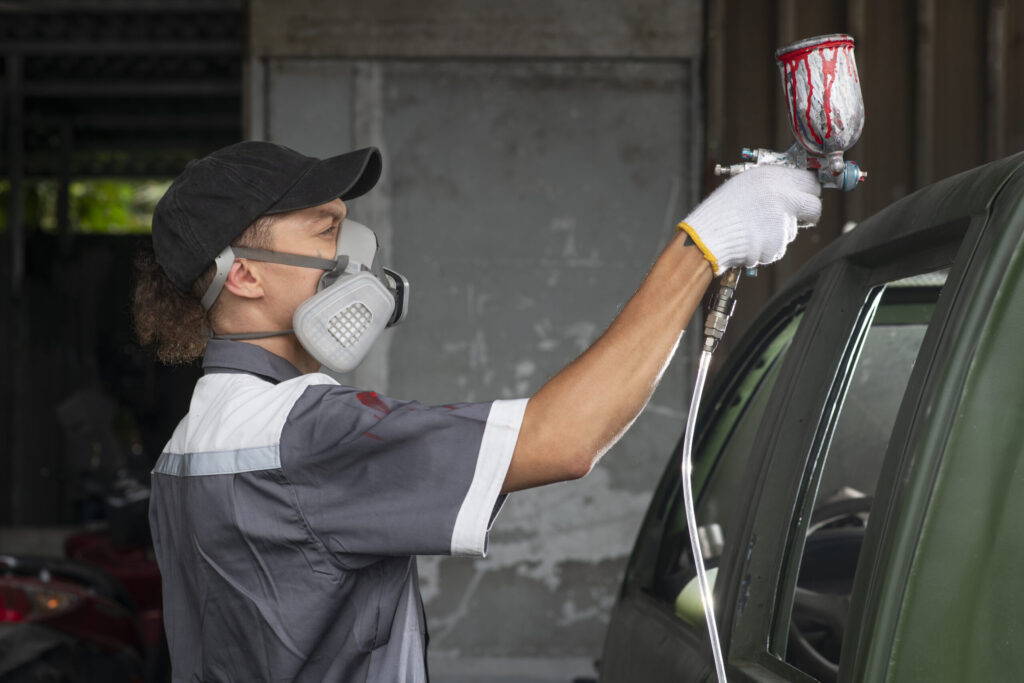
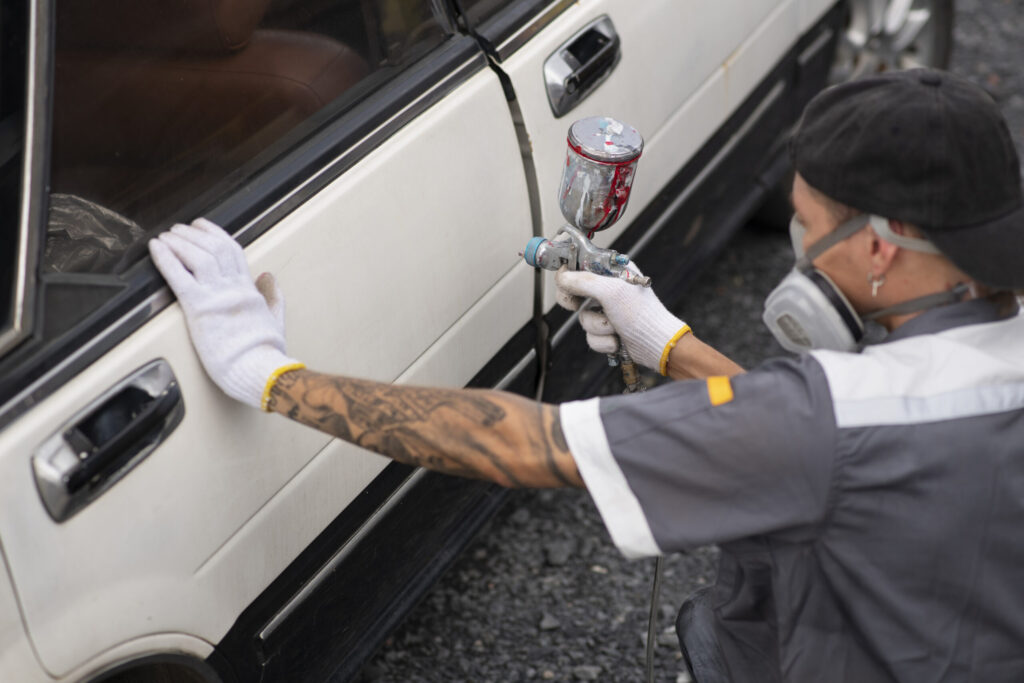
At VIP Collision in Henderson, a sun-damage repair follows the same careful steps as any professional auto paint refinishing job:
- Inspection. We check every panel to see how far the failure has spread. Clear coat that looks fine next to a peeling patch is often already weak.
- Remove the failed coating. The loose clear coat is sanded back to a solid, well-bonded layer, and down to primer or metal where needed.
- Feather and prime. Edges are feathered smooth so the repair won’t show, and any bare areas are primed and sealed.
- Computerized color matching. Sun-faded paint is no longer the exact factory color, so we match the paint to your car as it is today, not just to the paint code.
- Base coat, clear coat and blending. Color and a fresh, full-thickness clear coat are applied in a heated paint booth, then blended into the neighboring panels so you can’t see where the repair starts.
- Cure, polish and inspect. The finish is cured, polished to match the gloss of the rest of the car, and checked in proper light before you pick it up.
One VIP customer brought in a family car for collision work and decided to have his truck’s hood and roof repainted too, because they were fading from the Vegas sun. In his review he said the blend was so good he couldn’t tell new paint from old. That is the goal of every sun-damage repair. Read more customer reviews.
How much does it cost to fix peeling paint?
The price depends on how many panels are affected and how deep the damage goes. National industry ranges run from roughly $500 for a small spot repair to $5,000 or more for a full-vehicle respray. Most Las Vegas cars with sun damage fall somewhere in between, since the hood and roof are usually the main problem panels.
What drives the price:
- The number of panels (hood only, or hood, roof and trunk)
- Whether only the clear coat failed or the color and primer are damaged too
- Paint type (tri-coat pearls, metallics and luxury brand colors cost more)
- How much blending is needed into neighboring panels
The cheapest repair is the early one. Peeling spreads, and a single-panel fix this year can become a three-panel job by next summer. For an exact number, get a free auto body estimate.
Does insurance cover peeling paint?
Usually not. Most auto policies treat sun damage and clear coat failure as normal wear and tear, not as an accident. Coverage can apply when the paint damage comes from a covered event, such as a collision, hail or vandalism. If you’re not sure, our team can look at the damage and explain what may qualify. See our insurance claims page.
How to keep your paint from peeling in the desert
- Park in shade or a garage whenever you can. Covered parking matters more here than almost anything else. Use a breathable, fitted car cover if your car sits outside for long periods.
- Wash every one to two weeks, early in the morning or in the evening, never on a hot panel in full sun. Dry the car to avoid water spots.
- Remove bird droppings, bugs and sap right away. In 110°F heat they etch the clear coat fast.
- Protect the clear coat. Wax every few months, or use a longer-lasting sealant or ceramic coating. Paint protection film on the hood and front end also blocks chips.
- Fix chips and scratches early. A small chip is an easy way in for clear coat failure.
- Inspect the hood and roof every season. Catching haze at Stage 1 can save you a full refinish.
Get sun-damaged paint fixed in Henderson and Las Vegas
VIP Collision is a family-owned auto body shop in Henderson, run by owner Steve Hovsepian since 2012. We repair and refinish sun-damaged paint on everyday cars, trucks and SUVs, plus luxury, exotic and electric vehicles, for drivers across Henderson, Las Vegas, Boulder City and the rest of the valley.
- Address: 323 Sunpac Ct, Henderson, NV 89011
- Phone: 725-999-4661
- Hours: Monday–Friday, 8 AM–5 PM; Saturday by appointment
Walk in for a free, no-obligation look at your paint, or schedule your estimate online. Want the bigger picture on refinishing? Read Everything You Need to Know About Auto Paint Refinishing in Las Vegas or see our auto body paint services.
Frequently asked questions
Why is my car’s clear coat peeling?
Most often because years of UV exposure and heat have made the clear coat brittle, so it loses its bond with the color coat underneath. In Las Vegas this happens faster than in milder climates. A poorly done earlier repaint can also cause it.
Can peeling clear coat be buffed out?
No. Buffing can improve early haze and dullness, but once the clear coat is lifting or flaking, the panel has to be sanded and refinished.
Will peeling paint keep spreading?
Yes. Once the edge of the clear coat lifts, heat, dust and moisture get underneath it and the peeling grows. Repairing it early keeps the job smaller and cheaper.
Can you repaint just the hood and roof?
Often, yes. Sun damage is usually worst on horizontal panels, so many repairs cover only the hood, roof or trunk, blended into the surrounding panels so the color matches.
How long does a peeling paint repair take?
It depends on how many panels need work. A single panel is often done in a few days, while multi-panel refinishing takes longer because each coat needs time to cure. Your estimate will include a timeline.
Is it worth fixing peeling paint on an older car?
Usually, if you plan to keep or sell the car. Peeling paint hurts resale value, and exposed primer or metal can lead to rust. A focused repair on the worst panels is often a reasonable middle ground.
Does a ceramic coating stop paint from peeling?
A ceramic coating adds UV and chemical protection and helps healthy paint last longer in the desert. It can’t repair clear coat that is already failing. It should go on after the paint has been corrected or refinished.