Cars move like extensions of daily life. Once one of them is broken, the world seems to lose its rhythm to some extent. The fact that it must be restored to its original shape is not merely a repair exercise. It proves to be a reversion to the norm. The auto body repair process may seem complex from the outside, yet it follows a thoughtful and structured flow.
Every stage is aimed at the restoration of appearance, strength, and safety. All this is done step by step with the help of technical expertise and general experience. With a clear understanding, one does not feel lost in the whole process of restoring a vehicle, but rather encouraged.
What Is the Auto Body Repair Process?
The auto body repair process refers to a sequence of procedures used to fix damage on a vehicle’s exterior and underlying structure. The damages can be caused by collisions, weather, road debris, or even mere wear. But repair is not the mere act of restoring a car to good appearance. It guarantees safety standards.
The vehicle repair process focuses on restoring durability, alignment, and factory specifications. Precision is applied in terms of parts that are being examined, repaired, replaced, and refinished by skilled technicians. All this is done to make sure that the vehicle runs smoothly and nothing appears to have taken place.
Initial Assessment: How the Vehicle Repair Process Begins
The first stage of every journey is the realization of the level of destruction. The initial one is a proper inspection. Technicians examine the dents, scratches, broken components, and internal impact. The condition may also be surveyed by insurance inspectors. This detailed evaluation helps determine the steps in auto body repair required. Since precision is important, there is no part left unattended.
A small dent on the surface may represent a more serious structural problem. Therefore, careful assessment ensures the process of car damage repair is planned properly. When the estimation has been done, the cost and the time frame to finish the repair are clear and transparent.
Disassembly: Taking Apart the Damaged Vehicle Parts
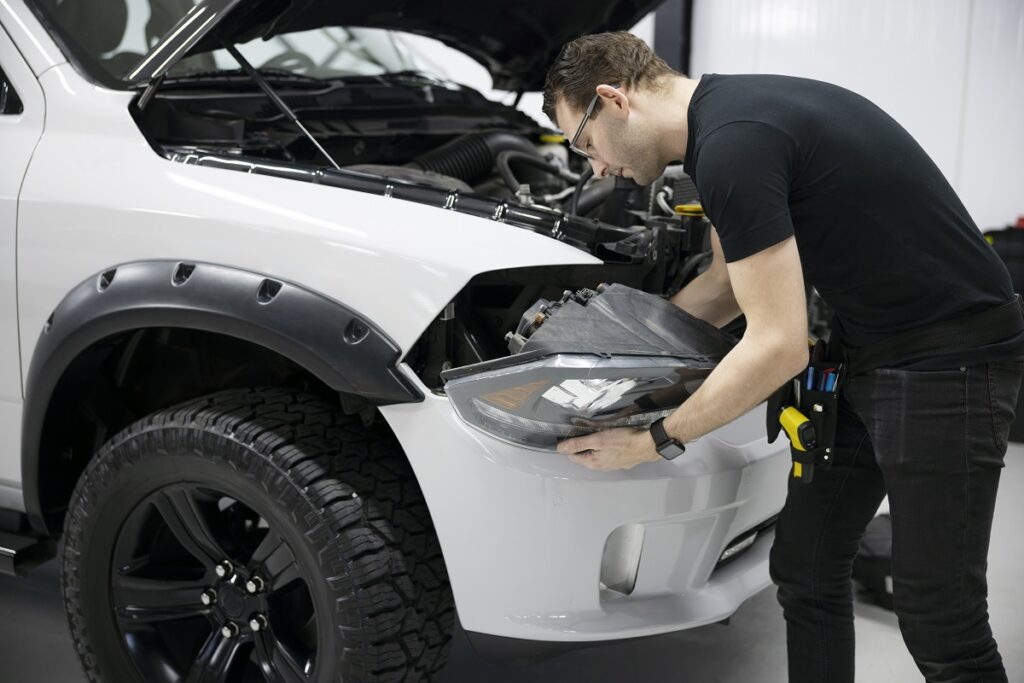
The damaged areas may require eradication in order to be repaired. In the process of disassembly, the technicians remove panels, bumpers, lights, and other parts that are affected. This can expose internal injury that otherwise could not be observed previously.
In the meantime, the photographs and documentation can be made to ensure that all its parts are replaced properly in the future. This phase is somewhat similar to a puzzle. Peeling the outer layers enables technicians to know the depth to which the damage has penetrated. It gets the vehicle ready to undergo structure and surface repairs that come thereafter.
Frame and Structural Repair
In case this hits the frame of the vehicle, it is a crucial stage. Structural alignment is the way a car is driven and handled. Dedicated machinery would test factory precision and assist in repairing precision. Hydraulic machines are used by the technicians to push or pull the frame back into position. This is done to make sure that the security of the car is not compromised.
The research conducted by the National Highway Traffic Safety Administration upholds the role of frame integrity in protecting against crashes. Even a cosmetically repaired vehicle can not be safe without structural repair. Consequently, this requires restoring credibility so that trust can be regained in the performance of the vehicle.
Panel Replacement and Body Work
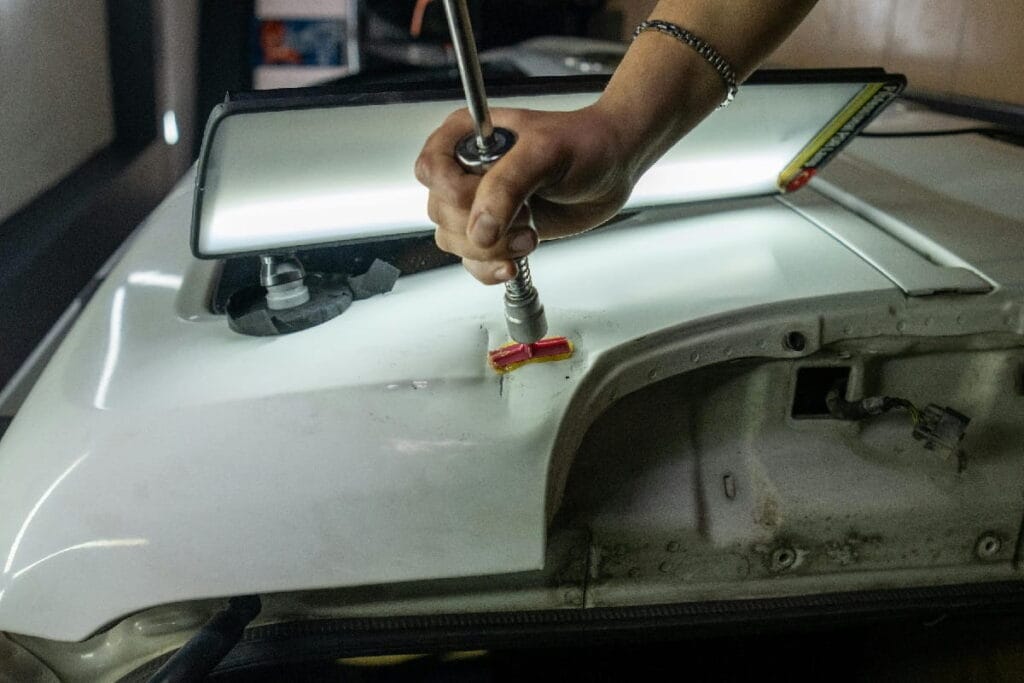
The next thing that is usually repaired is surface damage. When dents are deep, repairing car body damage may require panel replacement. However, if dents are minor, technicians use body shop dent repair methods such as pulling, filling, or reshaping.
Car dent and scratch repair focuses on creating a smooth surface that prepares the car for refinishing. The intention is to ensure that the place that has been repaired fuses well with the rest of the vehicle. All curves and lines need to be the same, and the body should appear smooth. Accuracy and time are of great significance.
Painting and Refinishing
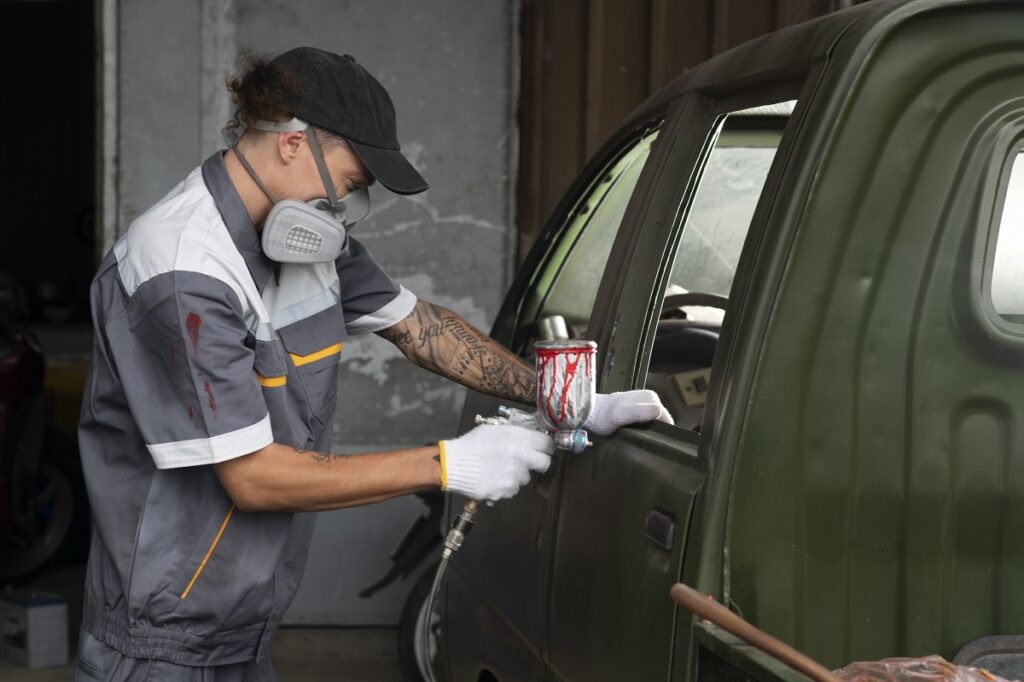
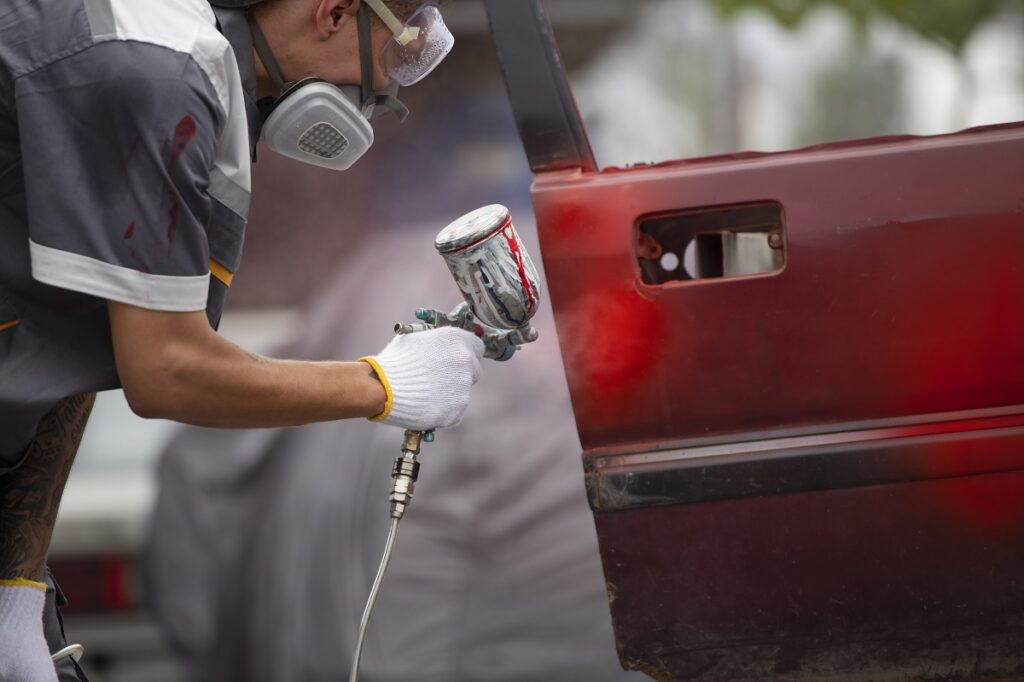
Painting is used to restore the beauty and protect the metal against rust and weather. The shade has to fit exactly into the original shade. Sophisticated paint-matching systems assist this. Refinishing is done through sanding, priming, painting, and clear-coating. The coats should be dried and polished correctly. The finish must be smooth and uninterrupted all over the vehicle. This stage is one of the most noticeable in the auto body repair stages, because it brings the visual transformation to life. The last impression is that of quality as a result of the shine and texture.
Reassembly and Quality Control
After it is all restored, technicians start reassembling. Every part that was removed previously is restored in a cautious manner. All the wires, brackets, latches, and clips should be installed to perfection. In the meantime, there is a check of lights, sensors, doors, and handles. Again, proper alignment is verified.
The car is checked in various perspectives and decently lit so as to make all the surfaces appear even. This stage is a combination of accuracy and validation. When something does not seem right, it is immediately rectified and then proceeded with.
Final Inspection and Delivery
Before the vehicle is returned, a final inspection completes the collision repair procedure. The car is taken on a test drive by technicians to maintain a good performance. They inspect the looks, the fit, the paintwork, and the safety aspects. The work done is then led through the owner, and the process is made transparent. This scene is the completion of the repair journey. It is not simply to reimburse a car, but rather to recover trust, comfort, and reliability.
Why Timely Auto Body Repairs Are Crucial?
Delay in fixing the damage may result in the emergence of greater problems. Even a tiny dent may expose metal to moisture and lead to rust. The misaligned frame may influence the mechanisms of steering and tire wear. The faulty panels may affect the building through collisions.
In the process, the repairs will be done in good time, and this will lead to the assurance of safety and avoidable expensive damages in the future. The auto body repair process supports the long-term health of a vehicle. Resale value is also preserved by keeping a car in good condition. Simply put, timely care secures comfort as well as investment.
Conclusion
Understanding the auto body repair process removes confusion and helps build trust in the restoration journey. Every phase is focused and deliberate. The purpose of the assessment is the same: to recover the safety, functionality, and look. Maintenance is not a technical process only.
They are mindful actions of re-creating something that is important in daily life. A damaged vehicle repaired well and accurately does not have the memory of being wretched. It just resumes, steady, secure, and prepared for the road of tomorrow.